




Art on James | An Evening with Archibald Prize Winner Richard Lewer

Image credit: Portrait of Richard Lewer. Photo: Christian Capurro
Richard Lewer finds inspiration in the everyday: in observations, memories, landscapes, jokes and moments of quiet beauty. Working across painting and drawing, his practice often reveals the humanity in seemingly ordinary encounters. For his latest project, Lewer turns his attention to the James Street community, offering a personal perspective on one of Brisbane’s best-known neighbourhoods and the people who give it character.
On Thursday 29 October, Lewer will join Dr Lisa Slade, Hugh Ramsay Chair of Australian Art History at the University of Melbourne, for a conversation about his practice and new solo exhibition, Don’t Forget to Breathe, opening at Jan Murphy Gallery on Wednesday 28 October as part of Art on James.
The project is unique. Art on James began with a simple idea: that the experience of the James Street precinct could be about more than shopping. By bringing retailers and Brisbane’s leading gallerists together, the event created opportunities for art to be encountered in unexpected places. For some, this provided a first introduction to contemporary art in the familiar setting of a shop rather than a gallery; for others, an opportunity to explore James Street beyond its retail offerings and discover artworks in a different context.
Over the years, Art on James has continued to evolve. There is no fixed format or formula; each iteration responds to the artists, ideas and opportunities of the moment, shaped by the particular character of the street.
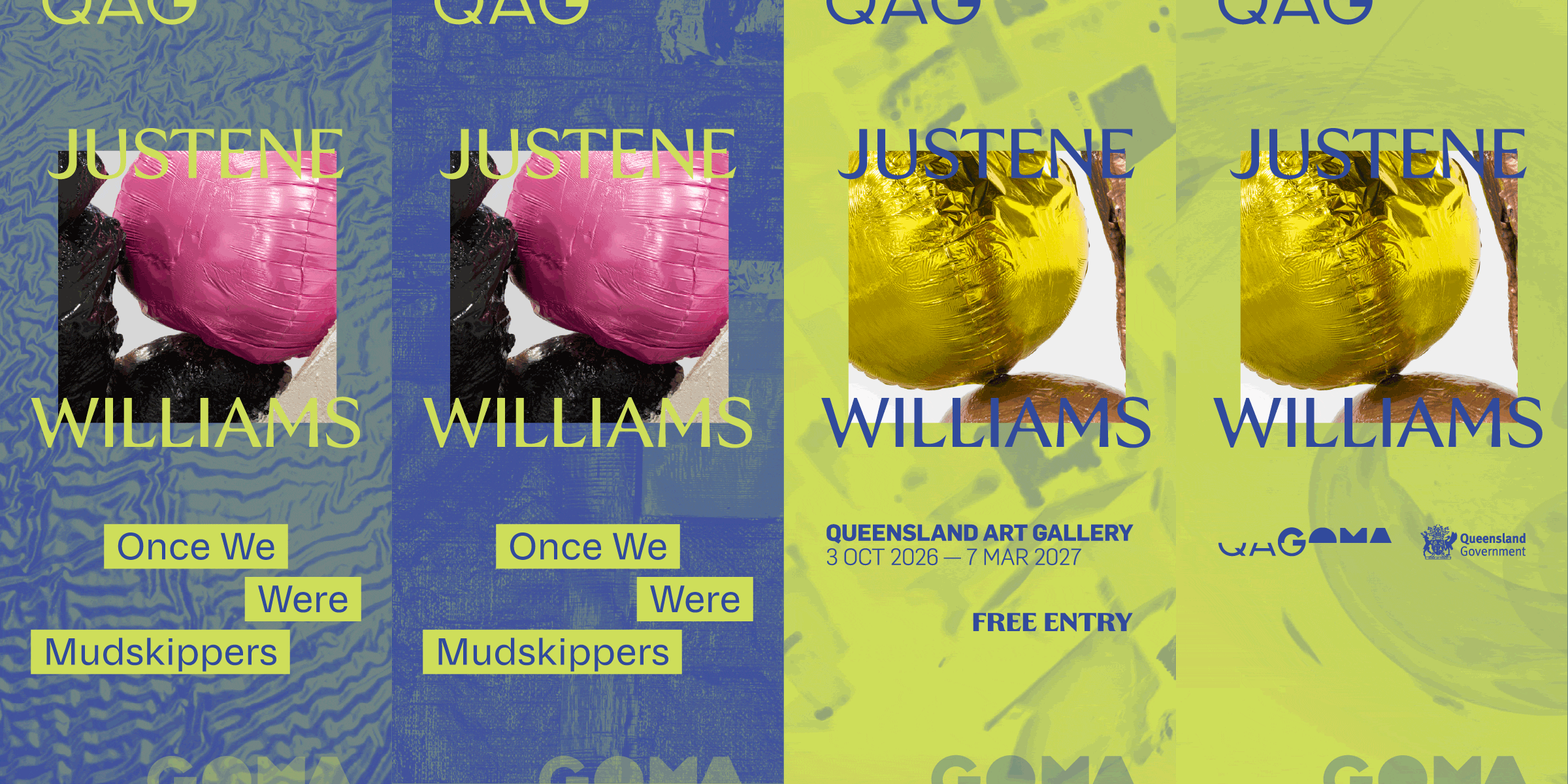
Over the past 15 years, Art on James has worked with artists including Ben Quilty, Richard Bell, Vernon Ah Kee, Helga Groves, Pope Alice, Jonathan Zawada, Jon Cattapan, Gerwyn Davies, Sam Cranstoun, Dale Harding, Sebastian Moody, Jemima Wyman, Ghost Patrol, Ross Manning, Zac Langdon-Pole, Justene Williams, LOVEWANT and Mindy Seu, exploring the intersections of art, commerce and design.
VAULT spoke to Lewer ahead of his Art on James project about winning the Archibald Prize with his portrait of Iluwanti Ken, his new show at Jan Murphy Gallery and what comes next.
Richard, congratulations on the Archibald Prize. I know from friends who have won it just how life-changing it can be. People have probably said that to you already, but is it even more than you realised?
It is. I think it’s because of the mainstream attention. People know the work and have a point of view, but they don’t necessarily know that you’ve been working for 30 years. Michael Rose, the chairman of the Art Gallery of New South Wales, said to me, “You’re an overnight success of 30 years.”
It’s true! It’s a fantastic painting. Congratulations. Are you travelling around the country with the exhibition now?
I am. Shepparton was a few weeks ago, and I think that exhibition is nearly finished. Then it goes to Moree in New South Wales. I feel I should make the most of this moment.
Absolutely. It’s historic, and people want to hear from you and understand the work. Lean into it. Take the fame!
I keep pointing people towards Iluwanti Ken (the subject of the winning Archibald Prize portrait), which makes it easier. The ABC is doing an hour-long documentary about her and her family, which is fantastic. The more I can talk about her, the better. It means I don’t feel as though I’m banging on about myself. There’s only so much you can say about yourself before you want to talk about someone else.
You’re quite self-effacing. Tell me about the work you’re showing at Art on James and the exhibition running concurrently at Jan Murphy Gallery.
After I won the Archibald, I said to Jan that I thought I needed a break because everything had been so full on. She suggested I make some smaller works, just responding to whatever was around me.
Michael Schwartz and David Cole arranged a residency for me at Abbotsford Convent. It was an amazing space: a huge, bright, warm studio. We’d just moved house and I didn’t have a studio of my own, so being able to work there for three and a half months was perfect.

Image credit: Richard Lewer, I hope Richard Lewer continues with art classes when he goes to high school, 2026, acrylic on linen, 36 x 36cm. Courtesy of the artist and Jan Murphy Gallery, Meanjin/Brisbane
Tell me a little more about working at Abbotsford Convent. What was that experience like?
It was a bit haunting, to be honest. I was working in the packing room, which was literally where they used to do the laundry and packing. It’s a heritage-listed building, and much of it remains as it was. You can feel the history and the stories in the place. My assistant refused to stay after about 4.30 or 5.00 o’clock. She’d say, “I’m out of here.”
I don’t blame her!
Apparently, a kneeling nun was often seen in the space where I worked.
And you never saw her?
No, but I was quite excited by the possibility. I stayed late a few nights thinking, “Okay, tonight’s the night.”
Perhaps they only appear when you’re not looking. Did the residency influence the way you approached the work?
I made work in response to what was happening around me, almost like a news cycle. It might be Pauline Hanson, the war in Iraq, tropical cyclones or the Sydney Swans. I felt like an antenna, picking up on stories that were in my orbit.
Normally, I do a deep dive into a subject, with six months of research and everything that goes with it. This was different. It was about reacting and responding.
Is that a quicker way of working?
It is. I’m pretty brutal. I’ll tear things up when they no longer feel relevant.
One of the first things I responded to was the 1800 or so comments on Instagram and Facebook about the Archibald. A lot of them were really nasty. I live in a bubble. I had no idea. My assistant started reading some of the comments to me, and they were vile. I don’t understand why people do that or what they get out of it.
I started making art to try to understand and reason with what was happening. One woman in America said, “My six-year-old can do it.” She even set up an easel with a picture of Iluwanti Ken, supposedly demonstrating that a six-year-old could do the same thing.
I made a series of works in response, many of them text-based. I probably made 20 or 30 and then tore a lot of them up because I didn’t want to give those comments any more power. It was a way of processing what I was seeing.
Some of the works were funny. One said, “Bloody woke decision. I can’t wait to see what Richard does after high school.” Others were much uglier. There was some really appalling racism directed at Iluwanti and her family.
Thankfully, they would never have seen most of it. But the whole thing was disturbing. Hugo Michell, of Hugo Michell Gallery, closed down his website and everything.

Image credit: Richard Lewer, Off to see Iluwanti, 2026, acrylic on linen, 36.0 x 41.0 cm. Courtesy the artist and Jan Murphy Gallery, Meanjin/Brisbane.
It’s extraordinary. You can’t seem to make anything that is even vaguely human without people trying to turn it into a political agenda.
I know. I’m an artist. I’m not trying to push a political agenda. Some people do that, and that’s fine, but that wasn’t what I was doing. I was celebrating Iluwanti. She’s an incredible woman. That was the starting point for the exhibition at Jan Murphy Gallery. I tore up a lot of those works and continued responding to whatever was in front of me. The result is a compendium of conscious thought.
I’ll probably never work like that again. It was right for that particular moment. The residency had a finite timeframe and it gave me permission to enter that zone. It was exhausting because you were always thinking about the next thing. You weren’t necessarily focused on style or painting technique; you were documenting.
Looking at the works, from the painting of the missing cat Charlie to Malaysia Airlines Flight MH370, it feels as though we’re looking at the inner workings of your brain. Is that what we’re seeing?
Absolutely. With the Malaysia Airlines flight, for example, there was news about new technology that might help map where it had gone. That mystery was still in the news, so I responded to it. The word compendium probably describes the work best. It’s free-flowing and could go on endlessly, but it’s also nice to know that it has a beginning and an end. It captures that particular period, from the start to the finish of my residency at Abbotsford Convent. It’s a time capsule.
Tell me about what you’re doing for Art on James.
I met Marie-Louise Thiele from The New Initiative, and she told me about the project. I was immediately interested because, from very early on, I’ve loved people’s stories. I sometimes think of myself less as an artist than as a journalist, going out and documenting people and their lives. I might walk past a house in the middle of the night with the lights on and wonder who’s inside and what their story is. I’m interested in the people in our neighbourhoods and the lives they lead.
This project is a snapshot of James Street. I know it’s a bit of a bubble, and I like that too. People can have preconceived ideas about wealth, fashion and the people who inhabit that world, but when you actually meet them, you discover something quite different.
James Street has changed the cultural fabric of Brisbane in a meaningful way. Indeed, I think it’s fair to say the precinct has changed the city, and the people who created that precinct and work there have contributed to that transformation. It’s also a model of private patronage that I find admirable. I can’t think of many other places in Australia where private investment has had such a meaningful cultural impact.
Exactly. They want to elevate the place, educate people and do something positive. There’s nothing negative about that. As an artist, it’s special to realise that you can make a difference by moving between different worlds and documenting people. I’m not a realist painter, but I try to capture the essence of a person and tell their story.
Have you drawn portraits of the people behind James Street?
Yes. Many are quick little line drawings, almost illustrations. They are what they are: portraits of people and their stories. Some people were more reluctant to be photographed or drawn.
The New Initiative introduced me to so many people. I spent three days on James Street meeting people and documenting not only the business owners but also the people who make the precinct work, like John, who delivers the mail for Australia Post, and the man who manages the traffic and parking.
He’s been there for 25 years and has seen the area change enormously. I was particularly interested in someone like him because he’s such an important part of the place, even though he doesn’t own a shop or have an obvious stake in the businesses.
The project is about all those people who have been part of James Street over time. It’s a little like the work I did for the Sydney Modern Commission at the Art Gallery of New South Wales, where I made portraits of the workers. (Lewer went behind the scenes to capture the stories and portraits of people involved in the design and construction of the Art Gallery’s new building with a multi-panel painting and suite of drawings that celebrated the labour and personalities of those who helped build the gallery.)
Tell me about some of the people you’ve met.
When I met Heidi Middleton, the fashion designer, artist and owner of Art Club, we spent about an hour and a half talking about painting. We didn’t talk about fashion at all. I told her straight away that I knew nothing about fashion, but she wanted to talk about painting. There were other people I didn’t know anything about, either, like Tyron Simon, who is behind Anyday Hospitality (the hospitality group behind Agnes, Bianca and a host of others). Someone asked, “Do you know who he is?” and I’d say, “No.” All I knew was that he was a lovely, positive person who was trying to make a difference. People can have preconceived ideas about successful or wealthy people, but I met people who were simply trying to do the best they could.

Image credit: Richard Lewer, People in your neighbourhood, 2026, 60 individual A4 drawings. Courtesy the artist and Jan Murphy Gallery, Meanjin/Brisbane.
How will people be able to see the James Street works?
The New Initiative is creating window decals featuring a compendium of text, images and stories. There may be several versions, potentially in A2 format. With my gallery, Jan Murphy, we’re also making a zine in collaboration with New Initiative. It will be an A4 publication featuring the people I’ve met, and it will be distributed throughout the precinct and in the shops. You’ll be able to pick it up and read about someone like Pedro: where he came from, how long he’s been there and what he does. It gives the place a personality.
I love that idea. It becomes a little collectible publication, something people can take away with them.
It’s been a really good project. It’s also unusual for a gallery to support something like this. Jan simply said, “This is a really cool project. Would you like to be involved?”
I think it’s a great opportunity for artists to work in different ways rather than simply putting a work on a gallery wall.
I’m interested in art outside the white cube, too. People increasingly expect to encounter art in public spaces, shops and places they visit in everyday life. They want to experience more than the commercial environment around them.
I’ve just done a project for the National Gallery of Australia about dementia, Steve, which combines animation with a series of paintings. It’s touring for four years, and there are workshops and other activities happening alongside it, including work with people living with dementia and people with disabilities. As an artist, that’s the kind of thing I want to do. It’s amazing that art can reach so many people. It doesn’t have to be an exclusive thing that simply sits on a wall. It’s been a huge learning experience.
What can people expect at the Art on James dinner?
I’ll be talking with Dr Lisa Slade, Hugh Ramsay Chair of Australian Art History at the University of Melbourne, who is wonderful. She’s incredibly knowledgeable and enthusiastic. I think the dinner is an opportunity for people to ask questions about the Archibald, the James Street project and the exhibition at Jan Murphy Gallery. There’s a lot happening, so we can talk about all those things. But it’s also a casual event where people can chat about whatever interests them and celebrate the projects together.
So, after all of that, what are you working on next?
I’m on Phillip Island at the moment for the Gathering art project. Then I have a residency in Paris at the Cité des Arts from 1 April to 30 June. I’ve never really spent an extended period overseas, so I’m excited about having that time. I want to take a break, fill my cup, look at art and take stock.
Art on James | An Evening with Archibald Prize Winner Richard Lewer is on Thursday 29 October 2026, hosted at Harveys Bar + Bistro. The evening includes a bespoke three-course dinner and a private, after-hours preview of the exhibition at the gallery.
harveysrestaurantgroup.com.au
jamesst.com.au
Don’t Forget to Breathe opens at Jan Murphy Gallery on Wednesday, 28 October 2026.
janmurphygallery.com.au
Tickets : Book Now